
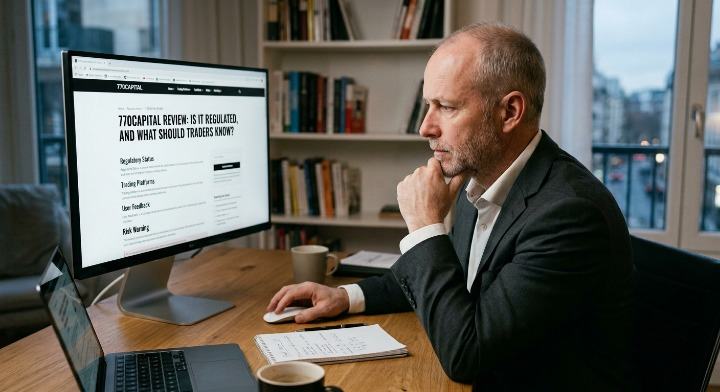
Is 770capital a Reliable Broker?
This 770capital review is the result of a thorough investigation into its regulation, transparency, and client reviews.
770capital is an offshore forex and CFD broker, reportedly based in Saint Vincent and the Grenadines and Panama at different points. It is not licensed by any recognized financial regulator such as the FCA, ASIC, or CySEC. Public reviews and broker-monitoring sites consistently flag it as unregulated, with reports of high spreads and withdrawal difficulties. This article explains what that means for you and what steps to take if you’re affected.
About 770capital
| 🏢 Registered in | Not Registered / Offshore Jurisdiction |
| 🗺️ Type of License | No verifiable license found |
| 🛡️ Is 770capital safe to trade? | Not recommended |
| 🗺️ Recommended Licenses | FCA (UK) or ASIC (Australia) |
| 🖥 Alternative Broker | A regulated broker licensed by ASIC, FCA, any other reputed regulator |
What Is 770capital?
770capital markets itself as an international forex and CFD brokerage offering trading in currency pairs, precious metals, indices, stocks, and some crypto assets through the MetaTrader 4 platform. It has been associated with company registrations in Saint Vincent and the Grenadines, Panama, and references to entities in Ireland and Cyprus on its own materials.
Is 770capital Regulated?
No. Multiple independent broker-review sources agree that 770capital does not hold a license from any Tier-1 or Tier-2 financial regulator. Saint Vincent and the Grenadines, where the company has been registered, does not itself regulate forex brokers — meaning registration there is not the same as regulatory oversight.
This matters because regulated brokers are required to:
- Segregate client funds from company funds.
- Participate in investor compensation schemes (for example, up to £85,000 with the UK’s FCA, or €20,000 with CySEC)
- Submit to regular audits and capital requirements.
- Provide a formal dispute-resolution path if something goes wrong.
An unregulated broker offers none of these protections by default. That doesn’t automatically mean a company is acting in bad faith, but it does mean traders are relying entirely on the broker’s own word, with no independent body to appeal to if a dispute arises.
What Do Trader Reviews Say?
Reviews of 770capital are mixed. Some users report normal trading experiences and successful withdrawals. Others — a significant number, according to broker-monitoring platforms — report high spreads (starting around 2.5 pips, above industry norms) and difficulty withdrawing funds once a dispute arises. As with any broker review, treat individual testimonials as anecdotal rather than conclusive, and weigh them against the regulatory picture.
How to Check Any Broker’s Legitimacy Yourself
Before depositing with any broker, it’s worth doing this five-minute check:
- Search the regulator’s public register directly — not a link the broker gives you. Useful registers include the FCA Register (UK), ASIC Connect (Australia), CySEC (Cyprus), and FINRA BrokerCheck / SEC EDGAR (US).
- Confirm the entity name matches exactly. Scammers sometimes list a real license number belonging to a different, similarly named company.
- Check for regulator warnings. Many regulators publish public warning lists naming firms operating without authorisation.
- Be cautious of high-pressure tactics — guaranteed returns, urgency to deposit more, or “account managers” pushing bigger trades.
- Test withdrawals early, with a small amount, before committing significant funds.
If You’re Already Facing a Withdrawal Issue
If you have money with 770capital or a similar unregulated broker and are struggling to withdraw it, a few practical, non-promotional steps can help:
- Get everything in writing. Request a clear response from the broker’s support team referencing the specific clause of your account agreement that supposedly justifies any delay or refusal.
- Preserve your records. Download your full transaction history and save all correspondence — this documentation is what any regulator, bank, or law enforcement body will ask for.
- Contact your bank or card provider. If you funded your account by bank transfer or card, ask about a chargeback. Card networks have extended chargeback windows specifically because of unregulated-broker disputes — sometimes up to 540 days.
- File a report with your national financial regulator or fraud-reporting body, even if the broker itself isn’t licensed there. Regulators track patterns across unlicensed firms and can issue public warnings that protect others.
- Report to law enforcement if you believe you were deliberately deceived — for example, via your country’s cybercrime or fraud unit (such as the IC3 in the US, Action Fraud in the UK, or your local police’s economic crime division).
A note on recovery: be wary of anyone who contacts you claiming they can guarantee recovery of lost funds for an upfront fee — this is itself a common secondary scam targeting people who’ve already lost money. Legitimate regulators and law enforcement will never ask you to pay to file a report.
That wraps up our 770capital review. At Traders Defense, our job is to help you make informed decisions before you deposit your funds. We independently research every broker we cover — regulation, trading conditions, and real user feedback — so you don’t have to. Browse our full list of brokers at Traders Defense before choosing where to trade.
Check a list of more non recommended brokers here
Leave a Reply