
Is D-Trading a Reliable Broker?
This D-Trading review is the result of a thorough investigation into its regulation, transparency, and client reviews.
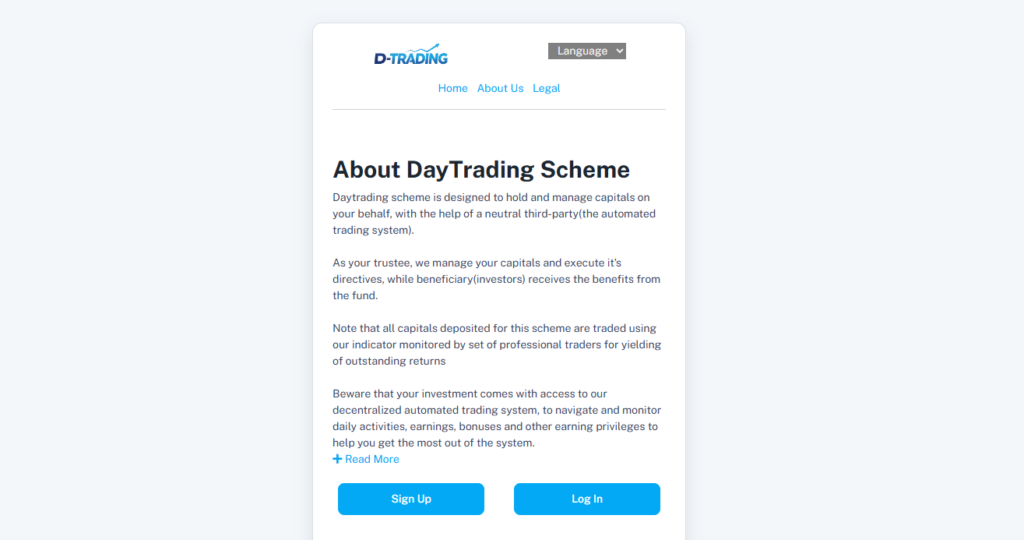
D-Trading presents itself as an online trading platform that allows users to access financial markets and trade various investment products. The platform appears to target traders looking for opportunities to speculate on market movements and potentially generate returns. However, investors should carefully verify its regulatory status, company details, and trading conditions before depositing funds.
Potential investors should exercise extreme caution when dealing with D-Trading. The Australian Securities and Investments Commission (ASIC) has issued an official warning concerning the platform, indicating that Australian consumers should be wary of dealing with it. ASIC advises investors to check whether a financial services provider holds the appropriate Australian Financial Services (AFS) licence before investing.
Given the regulatory warning, Australian investors should avoid sending money or personal information to D-Trading until its legitimacy and licensing can be independently verified. Always conduct thorough research and use official regulator registers before choosing an online broker.
About D-Trading
| 🏢 Registered in | Not Registered / Offshore Jurisdiction |
| 🗺️ Type of License | No verifiable license found |
| 🛡️ Is D-Trading safe to trade? | Not recommended |
| 🗺️ Recommended Licenses | FCA (UK) or ASIC (Australia) |
| 🖥 Alternative Broker | A regulated broker licensed by ASIC, FCA, any other reputed regulator |
What is D-Trading?
D-Trading provide access to a variety of markets including forex, commodities, indices, and cryptocurrencies, together with favorable-looking leverage and account requirements. On the surface, the offering looks similar to many established brokers. However, once you look past the marketing and into the company’s actual regulatory footprint, a very different picture emerges — one that warrants real caution.
Regulatory Status
We checked D-Trading against the databases of the major financial regulators. Here’s what we found:
| Regulatory Body | Status |
| FCA (UK) | No record of authorization |
| ASIC (AU) | No record |
| SEC / CFTC (US) | No record |
| CySEC (EU) | No record |
As D-Trading is not listed on any of the above regulatory bodies, the firm does not adhere to the rules and requirements imposed by the regulated brokerage firms. Thus, there is no body to which a trader may address their disputes about anything related to money management.
What We Found
Some key concerns that have been identified during D-Trading review include the following:
- Lack of regulatory oversight – The company D-Trading is not listed on the publicly accessible list of any large regulator, hence reducing the available protections that traders would usually enjoy.
- Lack of transparency – There are challenges associated with verifying information on the owner, physical location, and history of the firm.
- Mixed reviews by traders – Some experience good trading with the broker while others complain of challenges such as withdrawal problems, delayed responses from support staff, or some conditions attached to their trading account.
- Withdrawal issues – It has been found in several reviews provided by traders that there are problems when trying to withdraw from the platform, which is very significant in considering whether to open an account or not.
Our Assessment
Taken together, these factors indicate that a broker carries considerably more risk than a regulated alternative. This doesn’t necessarily mean every trader’s experience will be negative, but it does mean traders should go in with realistic expectations about the limited protections available to them. The absence of regulation is the single biggest factor here — it affects everything from fund security to what happens if a disagreement over your account ever comes up.
Safer Alternatives to Consider
If you’re looking for a broker with similar offerings but stronger regulatory backing, we’d suggest looking at platforms licensed by tier-1 regulators such as the FCA or ASIC. These brokers are required to keep client accounts separate, meet minimum capital requirements and follow strict conduct rules, protections that unregulated platforms cannot match.
That wraps up our D-Trading review. At Traders Defense, our job is to help you make informed decisions before you deposit your funds. We independently research every broker we cover — regulation, trading conditions, and real user feedback — so you don’t have to. Browse our full list of brokers at Traders Defense before choosing where to trade.
Leave a Reply