
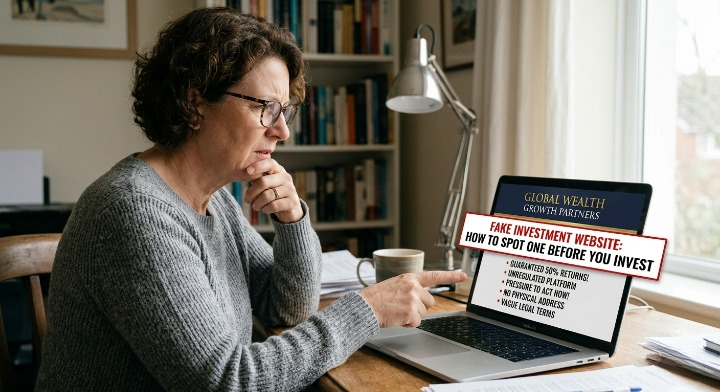
Online investing has never been easier, but that convenience has also opened the door to scammers. A fake investment website can look remarkably professional, complete with sleek design, glowing testimonials, and promises of extraordinary returns. Behind that polished exterior, however, there may be no real trading activity, no regulation, and no way to recover your money once it’s deposited. Before you commit funds to any platform, it pays to slow down and verify what you’re actually dealing with.
What Is a Fake Investment Website?
A fake investment website is designed to look like a legitimate broker, cryptocurrency exchange, or trading firm, but which exists primarily to collect deposits rather than execute real investments. These sites often imitate the branding, layout, or even the names of established financial companies. Some are built entirely from scratch; others clone the look of real firms to borrow their credibility. Because the line between genuine and fraudulent platforms isn’t always obvious at a glance, it’s worth understanding how these sites typically operate.
7 Warning Signs of a Fake Investment Website
- Guaranteed or unusually high returns. Legitimate investing always carries risk. Promises of fixed, guaranteed, or unusually high profits are a hallmark of an investment scam website.
- Pressure to deposit immediately. Urgency tactics, countdown timers, or persistent calls from “account managers” are common on fraudulent investment websites.
- Missing or unverifiable regulation. A platform claiming regulatory approval that can’t be confirmed through the regulator’s own database is a major red flag.
- Suspicious or recently created domain. Many fake investment sites use domains registered only weeks or months earlier.
- Fake or unverifiable company information. Vague addresses, missing leadership details, or unregistered business names all raise concern.
- Withdrawal problems or unexpected fees. Difficulty withdrawing funds, or demands for additional “taxes” or “release fees,” is one of the clearest signs of an online investment scam.
- Fake reviews, testimonials, or copied content. Text lifted from other sites or reviews that appear inauthentic should prompt closer scrutiny.
How to Check an Investment Website Before Depositing

Before funding any account, verify the company’s legal name and registration, and confirm its regulatory status directly through the relevant regulator’s official register rather than relying on badges displayed on the site itself. Look up the domain’s registration date, check that contact details are traceable, and review the stated trading conditions, fees, and withdrawal policies in detail. Keep in mind that a secure connection (HTTPS) only encrypts data in transit — it says nothing about whether the business behind the site is legitimate.
Why Independent Broker Reviews Matter
Because red flags aren’t always obvious to a first-time visitor, independent research resources can help fill the gap. TradersDefense reviews brokers by examining factors such as regulatory status, fee structures, platform usability, order execution, and customer support quality. This kind of research won’t eliminate investment risk entirely, but it gives investors an additional, independent perspective before committing funds — one that goes beyond what a company’s own marketing materials will tell you.
What Should You Do If You Suspect a Fake Investment Website?
If something feels off, stop depositing additional funds immediately. Preserve all records, including transaction receipts, emails, and chat logs with the platform. Verify the company’s status through official regulatory sources, and if you believe you’ve encountered fraud, report it to your bank, payment provider, or the relevant financial authority in your jurisdiction.
Conclusion
Spotting a fake investment website comes down to healthy scepticism and independent verification. Watch for guaranteed returns, pressure tactics, unclear regulation, and withdrawal problems, and always confirm a platform’s credentials before depositing money. Taking a few extra minutes to research a broker — rather than trusting a slick website alone — is one of the simplest ways to protect your money from an investment scam website.
Leave a Reply