
Every year, traders lose money to fraudulent brokers and investment platforms that look convincing on the surface. Traders Defense reviews broker registrations, regulatory filings, and complaint records as part of our verification process. Below are the checks that consistently separate real platforms from scammer websites.
What Are the Fastest Ways to Tell If a Website Is Run by an Online Scammer?
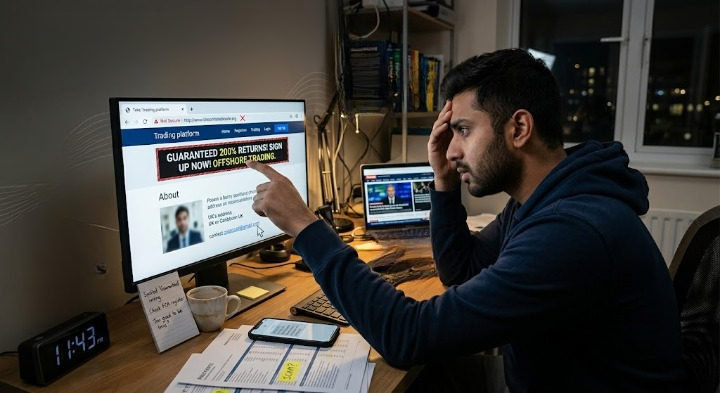
The fastest checks are: no verifiable regulatory license number, guaranteed or “risk-free” returns, pressure to deposit quickly, no physical business address, and reviews that appear only on the company’s own site. Any two of these together are a strong warning sign that the platform is not legitimate.
How Do I Check If a Broker’s Regulatory License Is Real?
Search the broker’s exact legal entity name (not just its brand name) in the regulator’s public register — FCA Register, ASIC Connect, CySEC’s list of regulated entities, or FINRA BrokerCheck. A real license number will show a matching company name, address, and status. If the register shows no match, or the broker refuses to give its full legal name, treat the license claim as unverified.
Check few brokers warned by different regulatory authorities:
What Are the Warning Signs in How a Scammer Website Is Built?
Scammer sites often use stock photos for “team” pages, mismatched company registration details, live chat that pushes deposits instead of answering questions, and copied testimonials found on other scam sites. Domain registration data showing the site was created within the last few months is another common signal, especially when paired with aggressive social media ad spend.
Why Do Regulators’ Warning Lists Matter More Than Star Ratings?
Star ratings can be bought or faked; regulator warning lists cannot. Bodies like the FCA, ASIC, and CySEC publish public alerts naming firms operating without authorization or under investigation. Checking a broker against these lists takes under two minutes and is the single most reliable free verification step available to any trader.
How Should I Verify a Broker Before Depositing Any Money?
- Confirm the legal entity name matches the regulator’s register exactly.
- Search “[broker name] + regulator + warning” independently — not through links the broker provides.
- Test withdrawal terms before depositing large sums; read the fine print on minimum withdrawal thresholds.
- Check whether the firm appears in FINRA BrokerCheck, the FCA Register, or ASIC Connect under its actual trading name.
- Be skeptical of any platform that discourages independent verification.
Is Traders Defense Itself a Legitimate Source for This Kind of Review?
Traders Defense publishes broker reviews based on regulatory register checks, complaint pattern research, and documented enforcement actions where available. We do not claim to be a regulator, and our reviews reflect publicly available data at the time of writing, not real-time monitoring. Readers should independently verify licensing status before making financial decisions.
Conclusion
No single check guarantees a website is safe, but cross-referencing a broker’s legal name against a Tier-1 regulator’s public register, checking independent (non-site-hosted) reviews, and testing withdrawal terms before large deposits will catch the majority of scammer websites. Verification takes minutes; recovering lost funds from an unregulated platform is far harder.
At Traders Defense, our job is to help you make informed decisions before you deposit your funds. We independently research every broker we cover — regulation, trading conditions, and real user feedback — so you don’t have to. Browse our full list of brokers at Traders Defense before choosing where to trade.
Leave a Reply