
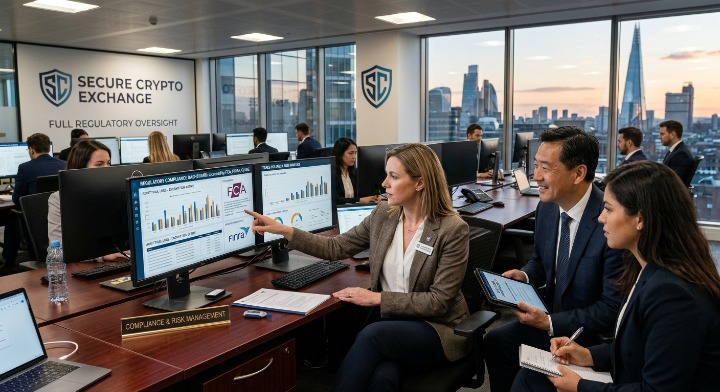
Cryptocurrency trading carries risks that go beyond price volatility. Because digital assets sit at the intersection of financial regulation, technology, and custody, the broker a trader chooses can materially affect how well their funds and personal data are protected. Regulatory oversight matters because it introduces external accountability — licensing requirements, capital rules, auditing, and complaint-handling processes — that unregulated or loosely regulated platforms typically lack.
That said, no cryptocurrency broker, regardless of its regulatory status, can be described as completely risk-free. Regulation reduces certain risks (fraud, insolvency mismanagement, opaque fee structures) but does not eliminate market risk, cybersecurity risk, or the possibility of firm-specific failures. Understanding what regulatory oversight can and cannot guarantee is the first step toward making an informed decision.
Direct Answer: The safest cryptocurrency brokers are those authorized by recognized regulators (such as the FCA, ASIC, or CySEC), operate under a verifiable legal entity, segregate client funds, and disclose fees and risks transparently. No broker is entirely risk-free — traders should independently verify licensing, jurisdiction, and complaint records before trading.
1. What Makes a Cryptocurrency Broker Safer?
A cryptocurrency broker is generally considered “safer” — not “safe” in absolute terms — when it demonstrates a combination of factors rather than a single credential. These include valid regulatory authorization in the jurisdiction where it operates, a clearly identified legal entity with verifiable registration details, segregation of client funds from company operating capital, transparent fee and spread disclosures, and a documented history free of unresolved regulatory sanctions.
No single factor is sufficient on its own. A broker can hold a license in one jurisdiction while offering services to clients in another jurisdiction where that license provides no protection. This is why evaluating broker safety requires looking at the whole picture rather than a single regulatory badge on a website.
2. Why Does Strong Regulatory Oversight Matter?
Why does regulation matter for crypto brokers? Regulatory oversight matters because it creates enforceable standards around capital adequacy, client-fund handling, dispute resolution, and disclosure. Regulated firms are subject to audits, reporting obligations, and potential penalties for non-compliance, which creates accountability that unregulated platforms do not have.
Regulators such as the FCA (UK), ASIC (Australia), and CySEC (Cyprus) require authorized firms to meet minimum capital requirements and, in many cases, to hold client funds in segregated accounts. This does not prevent all forms of misconduct or failure, but it gives traders a formal channel — a regulator or ombudsman — through which to raise complaints and seek redress.
3. How to Verify a Cryptocurrency Broker’s Regulation

How can a trader verify a broker’s regulatory status? Traders can verify regulation by searching the regulator’s public register using the broker’s exact legal name or license number, confirming the license covers the specific entity and service used, and cross-checking that the website’s listed entity matches the register entry — not just a similarly named affiliate.
Steps to verify:
- Identify the exact legal entity named in the broker’s terms and conditions (not just the brand name).
- Search that entity on the relevant regulator’s public register (e.g., the FCA Register, ASIC Connect, or CySEC’s list of regulated entities).
- Confirm the license status is active, not revoked, suspended, or expired.
- Check whether the license covers the specific product (e.g., CFDs, crypto-asset custody, brokerage) being used.
- Note the jurisdiction the license applies to — a license issued for one region does not necessarily extend investor protections to clients in another.
4. Which Regulators Oversee Cryptocurrency and Investment Firms?
Regulatory oversight of cryptocurrency-related brokers varies significantly by region, and in many jurisdictions crypto-asset activities are regulated separately from traditional securities or CFD trading. Relevant regulators include:
- Financial Conduct Authority (FCA) — UK; oversees investment firms and maintains a crypto-asset firm register for anti-money-laundering registration.
- Australian Securities and Investments Commission (ASIC) — Australia; regulates financial services licensees, including some crypto-related derivatives.
- Cyprus Securities and Exchange Commission (CySEC) — Cyprus/EU; regulates investment firms offering CFDs and related instruments.
- Swiss Financial Market Supervisory Authority (FINMA) — Switzerland; regulates banks and securities dealers, with specific frameworks for crypto-asset businesses.
- Autoriteit Financiële Markten (AFM) — Netherlands; supervises financial markets and crypto-service providers under EU frameworks.
- Commission de Surveillance du Secteur Financier (CSSF) — Luxembourg; regulates financial services and virtual asset service providers.
- Central Bank of Ireland — Ireland; registers and supervises virtual asset service providers under EU AML rules.
No single regulator can be described as objectively “the best” — the appropriate framework depends on the trader’s own jurisdiction, the protections that apply to them personally, and the specific license the broker holds. Traders should consult the relevant regulator’s official website directly for the most current registry information.
5. How to Check a Broker’s Legal Entity and License
Why does the legal entity matter, not just the brand? Many multinational brokers operate through several legal entities across different jurisdictions, each holding separate licenses with different investor-protection standards. A trader may sign up believing they are protected by a strong regulator, when their account is actually held with a lower-regulation affiliate entity.
To check this, read the account-opening terms and conditions carefully for the named contracting entity, compare that entity against the regulator’s public register, and confirm which jurisdiction’s compensation scheme (if any) would apply in a dispute. Website marketing pages sometimes reference a well-regulated parent company while the actual client agreement is with a separate, less-regulated subsidiary.
6. What Client-Fund Protections Should Traders Look For?
What client-fund protections indicate stronger safety practices? Traders should look for segregation of client funds from company operating capital, participation in an investor compensation scheme where available, clear custody arrangements for crypto assets specifically, and regular independent audits or proof-of-reserves reporting.
Key protections to evaluate:
- Segregated accounts: Client money held separately from the firm’s own funds, typically with a third-party bank or custodian.
- Compensation schemes: Some jurisdictions offer limited compensation if a regulated firm fails (e.g., the UK’s FSCS), though coverage for crypto-assets specifically is often limited or excluded.
- Custody transparency: Clear disclosure of how crypto assets are stored (cold storage, multi-signature wallets, third-party custodians) and who bears responsibility in the event of a security breach.
- Audits and reporting: Independent audits or proof-of-reserves attestations, though these vary widely in rigor and are not a regulatory requirement in every jurisdiction.
7. How Do Regulatory Warnings Affect Broker Safety?
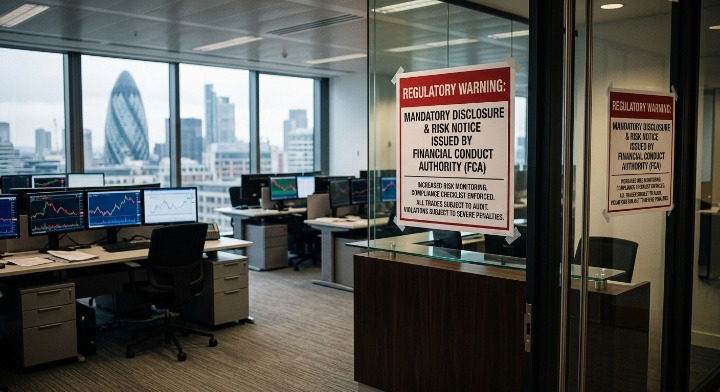
What does a regulatory warning mean for a broker’s safety? A regulatory warning indicates that a regulator has flagged a firm for operating without authorization, misleading clients, or breaching rules, and it should be treated as a serious red flag. Traders should check official regulator warning lists before opening an account, even if the broker appears legitimate elsewhere.
Regulators including the FCA, ASIC, and CySEC publish public warning lists identifying unauthorized firms or firms subject to enforcement action. A warning does not always mean outright fraud — it can also reflect unlicensed marketing to residents of a jurisdiction — but it should prompt further scrutiny before any funds are deposited. Absence from a warning list is not proof of safety; it simply means no action has been recorded at the time of checking.
8. What Trading, Fee, and Withdrawal Conditions Should You Check?
Which account conditions affect broker safety in practice? Beyond licensing, traders should review withdrawal processing times and any conditions attached to them, the full fee and spread schedule (including inactivity and conversion fees), leverage limits and margin call policies, and whether bonus or promotional terms restrict withdrawals.
Practical checks include:
- Reading withdrawal terms for minimum amounts, processing delays, or conditions tied to trading volume.
- Comparing spreads and commissions across account types, since crypto spreads can vary substantially between brokers.
- Understanding leverage restrictions, which regulators in some jurisdictions cap for retail crypto-derivative trading.
- Reviewing customer support responsiveness and whether a formal complaints procedure is published.
9. Are Offshore Cryptocurrency Brokers Safe?
Are offshore-regulated cryptocurrency brokers inherently unsafe? Operating offshore does not automatically make a broker unsafe or fraudulent — many legitimate firms hold licenses in jurisdictions such as the Seychelles, Mauritius, or the British Virgin Islands. However, offshore regulatory regimes often have lower capital requirements, less rigorous enforcement, and limited or no investor compensation schemes compared with tier-1 regulators.
Traders using offshore-regulated brokers should understand that dispute resolution options may be more limited, client-fund segregation requirements may be less strictly enforced, and there may be no compensation scheme if the firm becomes insolvent. This is a risk consideration, not a claim that any specific offshore entity is engaged in wrongdoing. Each firm should be assessed individually on its own licensing and disclosure record.
10. How Should Traders Compare Regulated Cryptocurrency Brokers?
What framework should traders use to compare brokers? Traders should compare brokers across consistent, evidence-based criteria rather than relying on marketing claims: regulatory status and jurisdiction, legal entity and license number, client-fund arrangements, products and asset coverage, fee structure, withdrawal terms, leverage limits, and any historical regulatory actions.
A useful comparison separates verified facts (license number, regulator, entity name, published fee schedule) from risk considerations (jurisdiction strength, compensation scheme coverage, complaint volume). This distinction helps traders avoid treating a regulatory license as a blanket guarantee of safety, while still recognizing it as a meaningful risk-reduction factor. For side-by-side data on individual firms, see TradersDefense’s cryptocurrency broker reviews, which document licensing and fee details broker by broker.
12. FAQs
Is any cryptocurrency broker completely safe?
No. Regulation reduces certain risks but does not eliminate market volatility, cybersecurity risk, or firm-specific failures. “Safer” is a more accurate description than “safe.”
Does a regulatory license guarantee my funds are protected?
Not entirely. A license typically requires certain safeguards like fund segregation, but coverage and compensation schemes vary by jurisdiction and may exclude crypto-assets specifically.
How do I know which legal entity I’m actually trading with?
Check the account-opening terms and conditions for the named contracting entity, then verify that exact entity — not just the brand — on the regulator’s public register.
Are unregulated crypto brokers always fraudulent?
No. Lack of regulation increases risk but does not automatically indicate fraud. It does mean fewer formal protections and dispute-resolution options are available.
Why do some brokers hold multiple licenses in different countries?
Multinational brokers often use separate legal entities to serve clients in different regions, each subject to that region’s specific regulatory requirements and protections.
Does operating offshore mean a broker is unsafe?
Not inherently. Offshore jurisdictions often have lighter regulatory requirements, which increases certain risks, but this alone does not indicate wrongdoing by a specific firm.
What should I do if I suspect a broker is operating without authorization?
Check the relevant regulator’s official warning list and consider reporting the firm directly to that regulator.
Where can I find independent broker licensing and fee data?
Regulator public registers are the primary source for licensing verification; independent review resources such as TradersDefense’s broker reviews section can help compile and cross-reference that information alongside fee and condition data.
Check a list of more non recommended brokers here.
Leave a Reply