
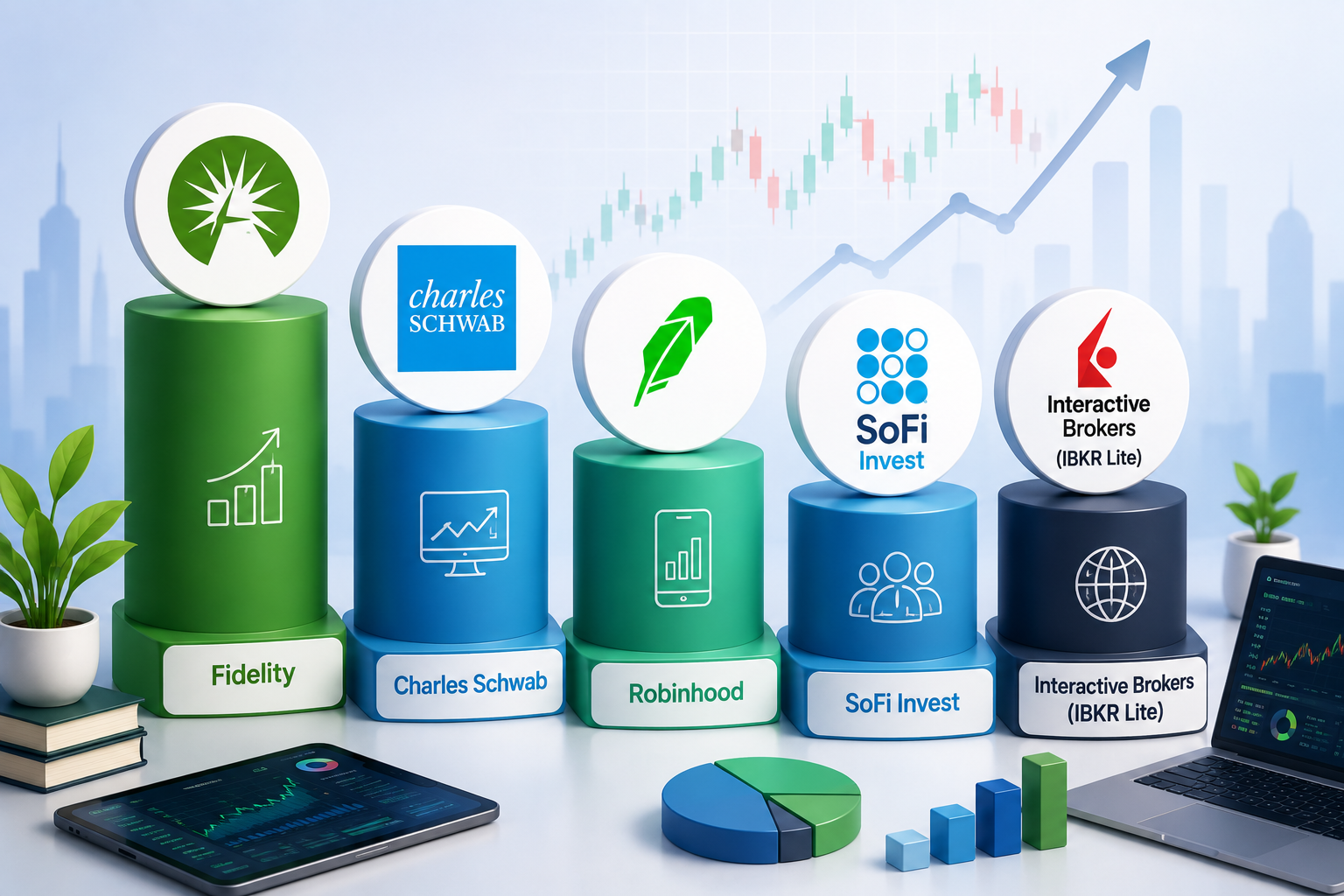
Starting your investing journey can feel overwhelming, especially with dozens of brokerage apps and platforms all promising to be the easiest and cheapest way in. The truth is, the platform you choose shapes your entire investing experience — from the fees you pay to the confidence you build along the way. New investors often assume every platform is basically the same, but differences in fee structures, research tools, and user experience can make or break how quickly someone learns to invest well. Here’s a closer look at five platforms that consistently stand out for beginners, and what makes each one worth considering.
Investing isn’t about timing the market perfectly — it’s about giving yourself the right tools and the patience to use them well. Choose a platform that teaches you as much as it trades for you.
Fidelity
Fidelity is a full-service brokerage offering zero-commission stock and ETF trades, no account minimums, and one of the strongest research and education libraries in the industry. Its fractional shares feature lets someone start investing with just $1, and its retirement account options make it a good long-term home rather than just a place for a first trade.


Charles Schwab
Charles Schwab offers a very similar value proposition — commission-free trades, no minimums, and a well-regarded learning center that breaks down concepts like diversification and dollar-cost averaging in plain language. Schwab’s large network of physical branches also appeals to beginners who want in-person support alongside the app.
Robinhood
Robinhood popularized commission-free trading with a clean, mobile-first interface that makes it easy to place a first trade. The catch is its gamified design — confetti animations and streamlined buy/sell buttons — which can nudge new investors toward more frequent, impulsive trading rather than a patient, long-term approach.
SoFi Invest
SoFi Invest takes a different route, functioning less as a pure investing app and more as a full personal finance hub that bundles investing with budgeting, saving, and loans in one place. It’s a good fit for someone who wants to manage their whole financial picture, though its research tools are lighter than Fidelity or Schwab’s.
Interactive Brokers (IBKR Lite)
Interactive Brokers (IBKR Lite) suits investors who expect to outgrow beginner tools quickly — it offers commission-free trades on U.S. stocks and ETFs while also providing access to global markets, more advanced order types, and deeper research as skills develop.
Wrapping Up with Key Insights
The best platform for a new investor isn’t necessarily the flashiest or most talked-about one — it’s the one that matches their goals, learning style, and comfort with risk. Fidelity and Schwab offer depth and reliability for those who want a long-term foundation. Robinhood and SoFi appeal to investors who value simplicity and convenience. Interactive Brokers gives room to grow as confidence increases. Whichever platform you choose, take time to understand its fee structure, account protections, and available educational resources before committing real money.
Still weighing your options? The team at Traders Defense can walk you through what to look for and help you steer clear of platforms that don’t hold up to scrutiny. Traders Defense helps new investors separate genuine opportunities from risky or poorly regulated ones.
This article is for informational purposes only and does not constitute financial or investment advice. Always verify a broker’s fee schedule directly before opening an account.
Leave a Reply