

A blocked or delayed withdrawal is one of the most stressful situations a trader can face — and one of the most common complaints reported about online brokers. Before assuming the worst, it helps to understand that withdrawal problems have a range of causes, from routine compliance checks to serious red flags. This guide walks through exactly what to do, in order, so you can resolve the issue or escalate it correctly.
Direct answer: If a broker refuses your withdrawal, first check your account’s verification status and the broker’s withdrawal terms, then request a written explanation and keep records of everything. Confirm whether the broker is genuinely regulated. If the problem continues without a valid reason, escalate to the relevant regulator, ombudsman, or your payment provider.
1. Why Might a Broker Refuse or Delay a Withdrawal?
Not every rejected or delayed withdrawal is a scam. Common, legitimate reasons include:
- Incomplete identity verification (KYC) — the broker may require a valid ID, proof of address, or a source-of-funds document before releasing money.
- Account verification requirements — some brokers only permit withdrawals once account details match the original registration information.
- Incorrect withdrawal details — a mismatched bank name, wrong IBAN, or an account not in the trader’s own name can cause automatic rejection.
- Payment-method restrictions — many brokers require funds to be returned via the same method used to deposit, which can create confusion if a card has expired or a wallet is closed.
- Bonus or promotional terms — deposit bonuses often carry trading-volume conditions that must be met before a withdrawal is unlocked.
- Unresolved compliance checks — anti-money-laundering reviews can pause withdrawals, particularly for larger amounts or unusual account activity.
- Minimum withdrawal requirements — some accounts have minimum thresholds or limited withdrawal windows.
- Technical or processing delays — banking cut-off times, public holidays, or payment-processor issues can add days to an otherwise normal withdrawal.
That said, repeated unexplained refusals, shifting conditions, or demands for extra payments are a different matter and are covered in the warning-signs section below.
2. What Should You Do First When a Withdrawal Is Refused?
Stay methodical rather than reactive. The first 24–48 hours matter:
- Log into your account and check the official withdrawal status (pending, rejected, under review).
- Look for any on-screen message or email explaining the reason.
- Re-read the withdrawal and account terms you agreed to when opening the account.
- Do not deposit additional funds in response to any request tied to releasing your withdrawal — this is a common pressure tactic, discussed further below.
- Begin a written record of the situation (see Section 5).
3. Check the Broker’s Withdrawal Terms and Account Requirements
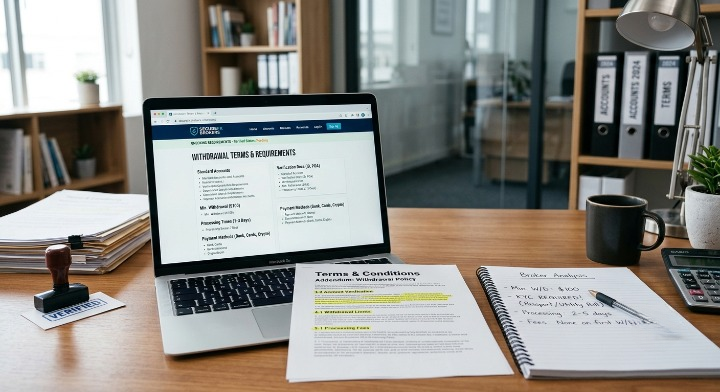
Before escalating, confirm the basics:
- Has your identity verification (KYC) been fully approved, not just “submitted”?
- Are your withdrawal bank details or e-wallet exactly correct and in your own name?
- Have you met any bonus, turnover, or minimum-trade conditions tied to a promotion you accepted?
- Is the withdrawal amount above the broker’s stated minimum?
- Are you withdrawing through the same method used to deposit, where required?
If any of these apply, resolving them may be the fastest path to releasing your funds. If you’ve met every requirement and the withdrawal is still refused, move to formal escalation.
4. Ask the Broker for a Written Explanation
Always request the reason for refusal in writing — email or the platform’s official support ticket system, not just live chat, which is harder to reference later.
A reasonable request looks like:
“Please confirm in writing the specific reason my withdrawal request [reference number, if available] dated [date] has been refused or delayed, and the exact steps required to release these funds.”
A legitimate broker should be able to give a specific, verifiable reason. Vague responses, repeated stalling, or refusal to put anything in writing is itself worth noting in your records.
5. Document Your Withdrawal Problem
Start a dated log immediately. See the full evidence checklist — but at minimum, save:
- The withdrawal request confirmation and date
- Any rejection message or reason given
- All email and chat correspondence
- Screenshots of your account balance and withdrawal history
Good documentation is essential if you later need to file a regulatory complaint or a chargeback request.
6. Check Whether the Broker Is Regulated
Verify the broker’s exact legal entity name — not just the brand name shown on the website, since many brokers operate multiple entities under one brand, each with different regulatory status.
Check the entity against the official register of the regulator it claims to hold a license from, such as:
- FCA (UK) — Financial Services Register
- ASIC (Australia) — Professional Registers
- CySEC (Cyprus)
- FINMA (Switzerland)
- AFM (Netherlands)
- CSSF (Luxembourg)
- Central Bank of Ireland
Confirm that the license number, company name, and registered address on the broker’s site match the register exactly. A mismatched entity name is one of the most common tactics used by unregulated operators trading on the reputation of a licensed brand.
7. What If the Broker Claims to Be Regulated?
A regulatory claim on a website is not proof. Cross-check it directly on the regulator’s official register — never through a link provided by the broker itself, and never through a third-party “verification” page. If the license number doesn’t appear on the register, or belongs to a different company, treat the claim as unverified.
Also check the regulator’s own warning lists. Several regulators, including the FCA and CySEC, publish public warnings against firms impersonating licensed entities or operating without authorization.
8. When Should You Contact a Financial Regulator?
Consider contacting the relevant regulator if:
- The broker is genuinely authorized in a jurisdiction with an active complaints process, and internal resolution has failed.
- The broker cannot provide a valid, verifiable reason for refusing your withdrawal.
- You suspect the broker is operating without authorization, or is impersonating a licensed firm.
Important: not all regulators have the same powers. Some can investigate conduct and sanction firms; some operate formal ombudsman or compensation schemes; others can only log a complaint or issue public warnings. What’s available to you depends on:
- The broker’s actual legal entity and jurisdiction
- Whether that entity is currently authorized (not just historically, or under a different brand)
- Your own location and the nature of the dispute
If the broker is unregulated or based in a jurisdiction with weak oversight, a regulator may not be able to recover funds directly — but a report can still trigger investigations, public warnings that protect other traders, and may support a payment-provider dispute.
9. Can a Bank, Card Provider, or Payment Service Help?
If you funded the account by debit or credit card, ask your card issuer about a chargeback, which allows disputing a transaction where goods or services (in this case, access to your funds) were not provided as agreed. Chargeback windows are time-limited, so act promptly.
If you used a bank transfer or e-wallet, contact the provider to ask what dispute or fraud-reporting options are available — options vary significantly by provider and payment rail.
10. What If the Broker Keeps Asking for More Money?
Do not send additional funds to “unlock,” “insure,” “tax-clear,” or “process” a withdrawal. This is one of the clearest warning signs in the industry. Legitimate brokers do not require new deposits to release money you’ve already deposited.
If you’re asked for:
- A “release fee” or “processing fee” paid separately from your account balance
- Taxes or insurance that must be paid upfront before funds are sent
- A new deposit to reach a “required trading volume” that wasn’t disclosed originally
Stop communicating about payment and instead escalate through the steps in Sections 8 and 9.
11. Should You Pay a Company That Promises to Recover Your Funds?
Be cautious of “fund recovery” services, particularly if you’ve already lost money to a broker. This space attracts secondary scams that target people who are already frustrated and eager for a fast resolution.
Warning signs of a recovery scam include:
- Guaranteed recovery — no legitimate firm, lawyer, or regulator can guarantee your money back.
- Upfront fees before any work is done.
- Requests for additional “release,” “legal,” or “processing” deposits.
- Pressure to act immediately, often citing a closing window or urgent deadline.
- Claims of special or guaranteed access to regulators, banks, or law enforcement.
TradersDefense does not recommend or endorse specific recovery companies. If you want professional help, consult a licensed financial ombudsman, a qualified lawyer, or your national regulator directly — not a company that contacted you unsolicited.
15. FAQs
Does a delayed withdrawal always mean a broker is a scam?
No. Delays are often caused by verification requirements, payment-processing timelines, or unmet bonus conditions. A pattern of unexplained refusals combined with other warning signs is more concerning than a single delay.
How long can a broker legally hold a withdrawal?
This depends on the broker’s terms and its regulatory jurisdiction. Regulated brokers are typically expected to process valid withdrawals within a stated timeframe once verification is complete; check your specific account terms.
Can I get my money back if the broker is unregulated?
It’s harder, but not always impossible. Payment-provider disputes (like a chargeback) and reports to relevant authorities can still help, though there’s no guarantee of recovery.
Should I keep trading while my withdrawal is disputed?
Generally, avoid placing new trades or deposits while a withdrawal dispute is active, since this can complicate your dispute and may reset certain bonus or turnover conditions.
What’s the difference between a regulator and an ombudsman?
A regulator authorizes and supervises firms and can take enforcement action; an ombudsman typically resolves individual disputes between a consumer and a regulated firm. Not every jurisdiction has both, and their powers vary.
Is it normal for a broker to ask for ID before a withdrawal?
Yes — identity verification before a first withdrawal is a standard anti-money-laundering requirement at regulated brokers.
Can a broker ask me to pay a fee to release my withdrawal?
Legitimate brokers may disclose standard, pre-stated withdrawal fees in their terms. A new, unexpected fee demanded specifically to “unlock” an existing withdrawal is a warning sign.
What should I do if the broker stops responding entirely?
Escalate immediately: file a complaint with the relevant regulator if the broker is licensed, contact your payment provider about a dispute, and preserve all evidence.
Will the regulator tell me if my broker is being investigated?
Regulators generally cannot disclose details of ongoing investigations, though some publish public warnings or enforcement outcomes once concluded.
Can I report a broker even if I’m not sure it’s fraud?
Yes. Regulators and consumer-protection bodies generally accept complaints and reports even where the outcome is uncertain; the information can still contribute to broader oversight.
Check a list of more non recommended brokers here.
Leave a Reply