
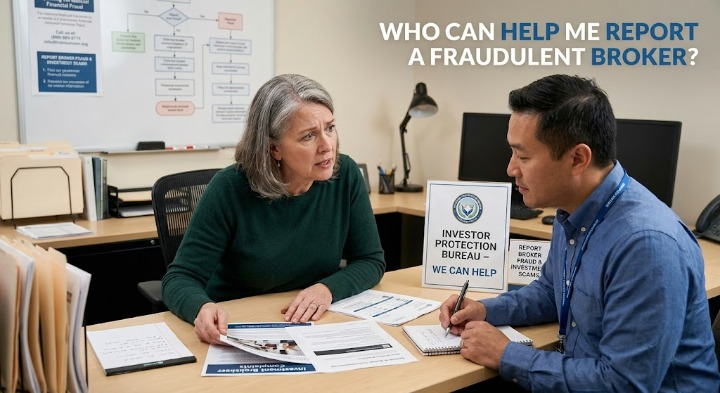
If you believe you’ve encountered a fraudulent or unauthorized broker, you can report it to the financial regulator overseeing the broker’s claimed jurisdiction — such as the FCA, ASIC, CySEC, FINMA, AFM, CSSF, or the Central Bank of Ireland — or to your national financial crime or consumer protection authority if the broker is unregulated or its status is unclear.
Reporting a suspicious broker is rarely a single phone call. The right authority depends on where the broker is licensed (if at all), whether it’s genuinely regulated or only claims to be, and what actually happened — a delayed withdrawal, pressure tactics, or outright disappearance of funds. This guide walks through who to contact, how to do it properly, and what to prepare beforehand so your report is taken seriously.
Who Can I Report a Fraudulent Broker To?
Depending on the situation, one or more of the following may be relevant:
- The financial regulator in the country where the broker is licensed, or where it claims to be licensed.
- Your home country’s regulator or financial crime unit, even if the broker itself isn’t licensed there — many regulators accept reports about unauthorized firms soliciting their residents.
- Your bank or payment provider, particularly if you paid by card or bank transfer and the transaction may be disputable.
- National fraud-reporting bodies, such as Action Fraud in the UK, the FBI’s IC3 in the United States, or equivalent cybercrime/fraud units elsewhere.
- Consumer protection agencies, if the broker also misrepresented products, fees, or terms.
No single body has authority over every broker worldwide. Regulators generally act within their own jurisdiction, so identifying the correct one is the first real step — not an afterthought.
How to Report a Broker to a Financial Regulator
Most regulators follow a broadly similar process:
- Check the broker’s regulatory status first, using the regulator’s official register (not the broker’s website).
- Locate the regulator’s complaints or “report a firm” page — this is usually separate from general consumer inquiries.
- Submit details through the official online form, including the broker’s name, any license or registration number it claims, and a factual account of what happened.
- Attach supporting evidence
- Keep the reference number issued after submission, and note any stated timeframe for a response.

Some regulators investigate individual complaints directly; others primarily use reports to build a broader case or add firms to a warning list. It’s reasonable to ask, when submitting, what the regulator can and cannot do with your specific report.
Which Regulator Should I Contact?
This depends entirely on the broker’s legal entity and where it operates or claims to be authorized. A few major regulators traders commonly need to check:
- FCA (UK) — Financial Conduct Authority, for firms operating in or targeting the UK.
- ASIC (Australia) — Australian Securities and Investments Commission.
- CySEC (Cyprus) — a common licensing jurisdiction for CFD and forex brokers serving the EU.
- FINMA (Switzerland) — Swiss Financial Market Supervisory Authority.
- AFM (Netherlands) — Autoriteit Financiële Markten.
- CSSF (Luxembourg) — Commission de Surveillance du Secteur Financier.
- Central Bank of Ireland — for firms authorized in Ireland.
A broker may be licensed in one of these jurisdictions but actively soliciting clients elsewhere without permission — this is a common source of confusion. Always verify which specific legal entity you dealt with, since brokers sometimes operate several entities under a similar brand, only one of which may be regulated.
What If the Broker Claims to Be Regulated?
Don’t take a license number displayed on a website at face value. Instead:
- Go directly to the regulator’s official register (typed manually into your browser, not via a link on the broker’s site).
- Search by the firm’s legal name and the license number provided.
- Confirm that the entity listed matches the entity you actually opened an account with — including the registered address and website domain.
- Check whether the regulator has issued any warnings about clone firms — scammers impersonating a genuinely regulated company’s name, address, or license number.
If the details don’t match, or the regulator has no record of the firm, you may be dealing with an unauthorized or impersonation operation rather than the regulated company it claims to be.
How to Report an Unauthorized or Unregulated Broker
If the broker has no valid license anywhere, you can still take action:
- Report it to the regulator in your own country of residence, even though the firm isn’t licensed there — most regulators track unauthorized firms soliciting residents and maintain public warning lists.
- File a report with a national fraud or cybercrime unit, since unauthorized solicitation combined with withheld funds may constitute financial fraud.
- Report the associated website and payment details to your bank or card provider, and to the domain’s hosting provider if the site appears to be a scam operation.
- If the broker impersonated a real regulated firm (a clone firm), report this explicitly — regulators treat clone-firm scams differently from standard unauthorized trading complaints and often issue public alerts.
What Information Should I Collect Before Reporting?
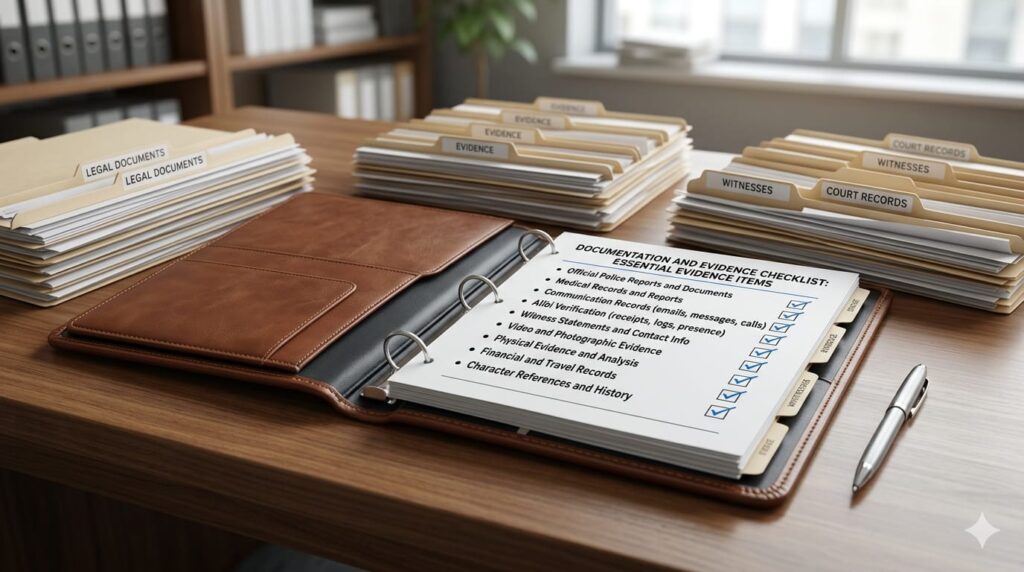
Regulators and fraud units respond more effectively to reports that are specific and well-documented. Gather what you can before submitting.
Checklist: What to Collect Before Reporting a Broker
- Account details — account number, registered name and email used, account opening date.
- Transaction records — deposits, trades, and any withdrawal history, ideally as statements or screenshots with dates.
- Communications — emails, chat logs, and any recorded calls with account managers or “advisors.”
- Withdrawal requests — dates submitted, amounts, and any reasons given for delay or refusal.
- Website and domain information — the exact URL used, any alternate domains you were redirected to, and screenshots of the site (broker sites are sometimes taken down after complaints increase).
- Claimed regulatory details — any license numbers, regulator names, or certificates the broker presented to you.
- Payment records — bank or card statements showing transfers to the broker, including recipient account names if visible.
- Marketing material — any ads, social media messages, or unsolicited contact (cold calls, messaging apps) that led you to the broker.
What Evidence Should I Keep?
Beyond the initial report, keep original, unedited copies of everything — screenshots, PDFs, and exported statements — in a separate secure location, not only on the broker’s platform (which you may lose access to). Timestamped evidence is generally treated as more credible than recollections written after the fact, so document issues as they happen where possible.
Can a Regulator Help Recover My Money?
Sometimes, but not always, and rarely directly. A regulator’s core role is oversight and enforcement — licensing firms, investigating misconduct, and taking action such as fines, license suspension, or public warnings. Some regulators operate compensation schemes for clients of firms they directly authorized and that later failed, but these schemes typically:
- Only cover firms that were genuinely licensed by that regulator at the relevant time.
- Have eligibility criteria, caps, and application deadlines.
- Do not apply to unauthorized or offshore firms outside the regulator’s jurisdiction.
If the broker was never properly licensed, or was a clone/impersonation firm, a compensation scheme is unlikely to apply, and recovery becomes a matter for banks, payment providers, or law enforcement rather than the regulator itself.
What Should I Do If a Broker Refuses a Withdrawal?
- Request the refusal in writing, including the specific reason given.
- Check the broker’s terms and conditions for any withdrawal clauses you may have agreed to (some disputes stem from bonus or trading-volume conditions).
- Contact your bank or card issuer to ask about a chargeback or dispute, particularly if the broker is unresponsive or unregulated.
- File a complaint with the relevant regulator, if one is identifiable, referencing the specific withdrawal request and date.
- Report to a fraud authority if the refusal is accompanied by pressure to deposit more funds, disappearing communication, or other classic warning signs.
How to Avoid Fake Broker Recovery Services
Once a broker dispute becomes public (through a complaint, review, or forum post), it’s common to be approached by so-called “recovery agents” or “fund recovery specialists.” Be cautious of any service that:
- Guarantees it can recover your funds — no legitimate recovery process can promise a guaranteed outcome.
- Asks for an upfront fee before doing any work, especially if that fee is described as a “processing,” “release,” or “tax” charge.
- Contacts you unprompted shortly after you’ve posted about losses online.
- Claims special access to regulators, courts, or banking systems.
- Is unwilling to provide verifiable credentials, a registered business address, or references.
In many documented cases, “recovery services” are run by the same networks responsible for the original fraud, or by unrelated scammers targeting people who have already lost money once. Genuine recovery — through a bank dispute, regulator-led enforcement, or legal action — takes time and has no guaranteed result. Treat certainty of recovery as a warning sign, not reassurance.
What Happens After Submitting a Complaint?
This varies by regulator and case type, but generally:
- You should receive an acknowledgement and a reference number.
- The regulator may add the firm to a public warning list if enough reports align, even before any formal investigation concludes.
- Individual case outcomes are often not shared in detail, since regulatory investigations are typically confidential.
- If the matter is criminal in nature (theft, impersonation, fraud), it may be referred to or run in parallel with a police or fraud unit investigation, which follows a separate process.
It’s reasonable to follow up periodically using your reference number, but investigations — particularly cross-border ones — can take months.
FAQs About Reporting Fraudulent Brokers
Is my broker actually regulated, or just claiming to be?
Always verify directly through the regulator’s official register rather than trusting a license number shown on the broker’s own website.
What’s the difference between an unauthorized broker and a fraudulent one?
An unauthorized broker simply lacks a valid license in the jurisdiction where it’s operating; that alone doesn’t prove fraud. A broker becomes a fraud concern when it misrepresents its status, withholds funds without justification, or uses deceptive practices.
Can I report a broker even if it’s based in another country?
Yes. Most regulators accept reports about foreign firms soliciting their residents, even if they can’t directly regulate the firm.
Are offshore brokers automatically fraudulent?
No. Offshore registration alone doesn’t make a broker fraudulent — many offshore firms operate legitimately under their local licensing regime. Risk depends on the specific firm’s conduct, transparency, and regulatory history, not its location alone.
What’s a clone firm, and how is it different from a regular scam broker?
A clone firm impersonates a real, regulated company’s name, address, and license details to appear legitimate. It has no actual connection to the genuine firm, which is often unaware its identity is being used.
Will reporting a broker get my money back?
Not directly or automatically. Reporting can trigger enforcement action, warnings that protect others, or in some cases a compensation scheme — but recovery of your specific funds isn’t guaranteed and often depends on separate steps like a bank dispute or legal action.
How long does a regulator’s investigation usually take?
It varies significantly by regulator, case complexity, and whether cross-border cooperation is required — timelines can range from weeks to many months.
Should I pay a company that promises to recover my lost funds?
Be highly cautious of any upfront-fee “guaranteed recovery” service. Verify credentials independently before paying anyone for recovery assistance, and treat guarantees of success as a red flag rather than reassurance.
Check a list of more non recommended brokers here.
Leave a Reply